
Ceremorphic

Applications

One architecture for a wide range
of markets and applications

01Datacenter

Application01

Datacenter AI Supercomputing

The energy required for current and future computing needs of high performance and LLM processing is skyrocketing in data centers. At the same time, reliability and security is a critical concern given the large number of processing systems manufactured in advanced nodes. Ceremorphic’s ground-up architecture built with hierarchical processing systems including hybrid quantum processors features low power consumption and industry-best-reliability technology to ensure uninterrupted application execution.

Key capabilities

  • Hierarchical processing with hybrid quantum processors
  • Low power consumption for high-performance and LLM workloads
  • Industry-best-reliability technology
  • Uninterrupted application execution
02Physical AI

Application02

Physical AI processors

Physical AI processing imposes stringent constraints on energy efficiency, reliability, and security while ensuring real-time responsible processing power, high-performance analog and sensor integration. Reliable and safety engineering is paramount for Physical AI devices to gain mainstream adoption and boost productivity across diverse market segments. Moreover, Physical AI systems will elevate the quality of life by offering applications tailored to consumer preferences. Ceremorphic, through its over 1000 person-year research effort, has developed a unified architecture to address the requirements of Physical AI systems with exceptional efficiency in all critical metrics.

Key capabilities

  • Real-time responsible processing power
  • High-performance analog and sensor integration
  • Reliable and safety engineering
  • Unified architecture from 1,000+ person-years of research
03Life Sciences

Application03

Life Sciences

The future of drug discovery lies in personalized medicine, free from side effects. This ambitious goal demands a quantum leap in technology at every stage of the current drug discovery pipeline. The pharmaceutical industry has faced significant challenges in drug development, primarily due to inefficiencies in the methodology, leading to increased costs, extended development times, and poor efficacy. The alarming statistics, with over 90% drug failures at Clinical Phase II and a mere small number of new drugs approved annually by FDA, underscore the urgency of the situation and necessitate a fundamentally new approach in the early stages of drug design and validation.

Ceremorphic has developed an innovative architecture based on its proprietary hybrid quantum and AI technology to predict outcomes more accurately early on, significantly enhancing the overall R&D efficiency of the process. The core principles of this approach revolve around generating sufficient relevant data to construct meaningful foundation models. This data is generated through in-silico emulation technology, harnessing the power of quantum chip technologies. This groundbreaking innovation has the potential to revolutionize drug discovery, not only accelerating the development of new drugs but also paving the way for the realization of personalized medicine in the near future!

Key capabilities

  • Proprietary hybrid quantum and AI technology
  • In-silico emulation technology
  • Foundation models from generated data
  • Path to personalized medicine
04Automotive

Application04

Automotive Processors

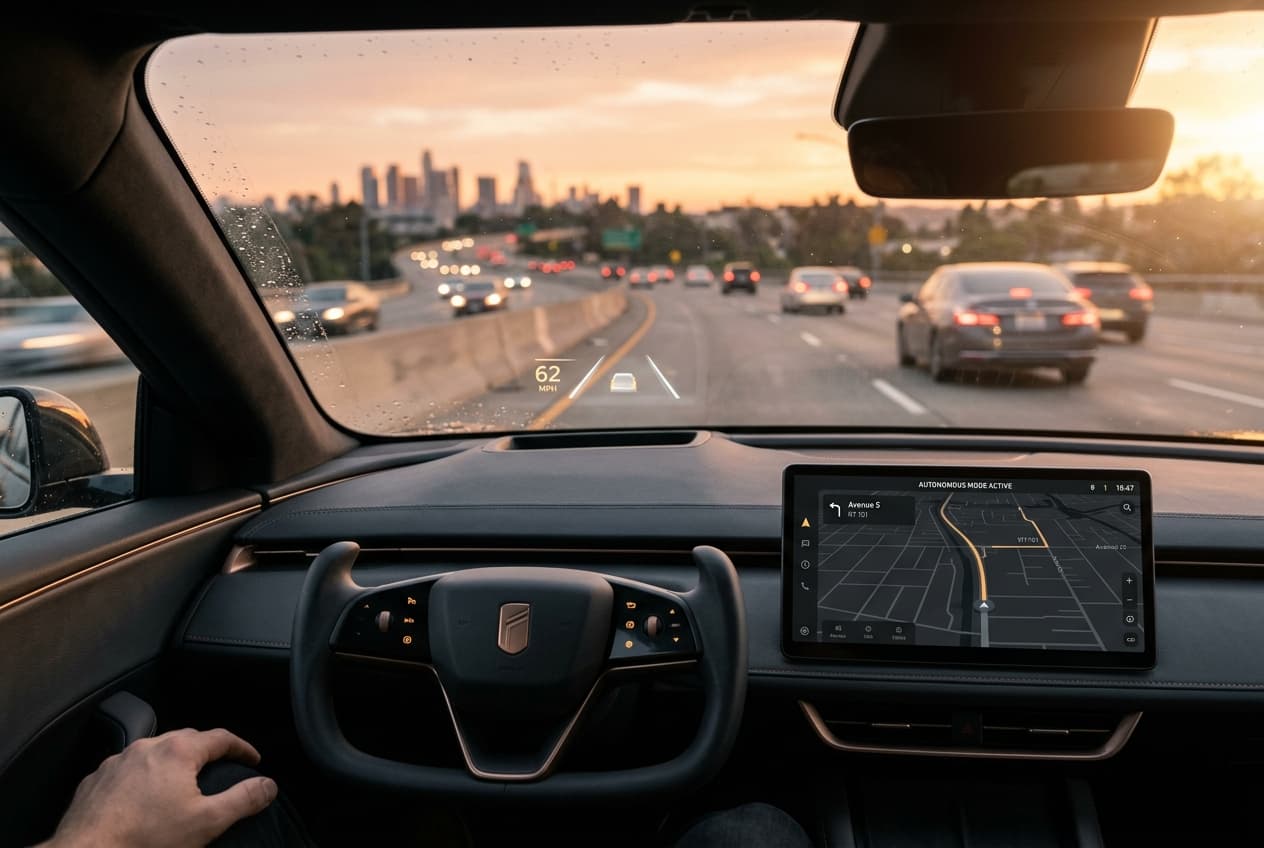
Reliable processing has been successfully used in automotive applications for decades. However, the advent of AI processing requirements for self-driving vehicles has pushed the performance, space, and energy efficiency demands beyond the current technology limits. Multi-modal sensor fusion is crucial to provide the required accuracy. Latency, secure execution, and low energy consumption are of utmost importance to make self-driving cars a common mode of transportation. The Ceremorphic ground-up architecture deploys ASIL-D compliant hierarchical learning processors specifically designed to meet these needs, enabling the adoption of advanced transportation at scale.

Key capabilities

  • ASIL-D compliant hierarchical learning processors
  • Multi-modal sensor fusion
  • Low latency and secure execution
  • Low energy consumption